Most high-performance operators carry a nervous system running on accumulated stress — and call it normal. The decisions made from that state are rarely the ones you’d choose with clarity. The body keeps the score. This retreat is a practical reset at the level of the system that governs everything else.
Eddie Stern brings 35 years of Ashtanga yoga practice, a decade of clinical research with institutions including Columbia University and the NYPD, and one central conviction: the nervous system is the substrate of performance. Regulate it, and you change the quality of your thinking, your risk perception, your sleep, your recovery, your relationships. Don’t, and all other optimisations plateau.
The Framework
This is not a wellness weekend. It is a four-day immersion in the practical science of nervous system regulation — grounded in Ashtanga tradition and validated by modern autonomic research. The two bodies of knowledge converge more precisely than most people expect.
The framework rests on a single insight: Heart Rate Variability (HRV) is the most measurable proxy for nervous system state — and it can be trained. The ancient techniques and the modern research point to the same interventions. We use both.
«The breath is the only part of the autonomic nervous system you can consciously control. That makes it the master lever.»
Baseline & Breath
Focus: Measuring the system. Learning the primary tool.
Before any protocol can work, you need an honest picture of where you are starting from. Day One is diagnostic — and then immediately practical.
- HRV Baseline Assessment. A morning measurement session that gives each participant a precise picture of their current autonomic state — not as judgment, but as data.
- Pranayama Foundations. The breath techniques drawn from Ashtanga practice — diaphragmatic extension, coherence breathing, breath retention — with the physiological mechanism explained alongside the practice.
- The Stress Architecture Audit. A structured inquiry into the specific patterns of activation that have become normalised. Where in the day does the system spike? What triggers remain unrecognised?
- Evening Reset Protocol. A 20-minute practice sequence for transitioning out of high-activation states — usable the same night.
Movement & Regulation
Focus: The body as a regulation instrument.
Movement is not separate from the nervous system work — it is the nervous system work. Day Two introduces the Ashtanga primary series not as a fitness practice but as a sequenced autonomic intervention.
- Primary Series Practice. A guided Ashtanga session adapted for the group — focused on the parasympathetic activation that comes from the combination of breath, movement, and gaze.
- Vagal Tone Training. Specific techniques for stimulating the vagus nerve — the central pathway of the parasympathetic system — including cold exposure protocols, humming, and extended exhalation.
- Sleep Architecture. The relationship between daytime regulation practices and sleep quality. What the research shows. What to do differently tonight.
- HRV Re-measurement. A second baseline after 36 hours of practice — so you can see the data move.
Recovery Architecture
Focus: Designing a sustainable system.
The point of the retreat is not the retreat. It is what you do on Tuesday morning, six weeks later, when the schedule is full and the stress is real. Day Three builds the practice architecture that travels.
- Personal Protocol Design. Each participant builds a regulation practice calibrated to their schedule, their travel patterns, and their specific activation profile.
- High-Performance Contexts. How to apply breath regulation before high-stakes meetings, negotiations, and decisions. The two-minute intervention that changes cognitive state.
- Recovery vs. Resilience. The difference — and why most high-performers optimise for the wrong one. What genuine recovery looks like, and how to build it into existing rhythms.
- Integration Ceremony. A group practice closing the retreat — and establishing the shared protocol as a reference point for the work ahead.
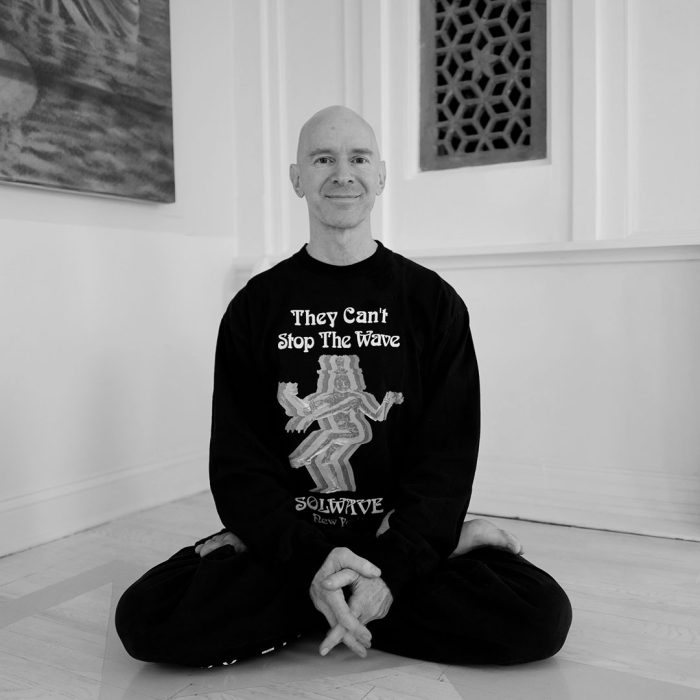
Eddie Stern
Eddie Stern has been teaching Ashtanga yoga in New York for over 35 years. He is the founder of the Ashtanga Yoga New York studio and author of One Simple Thing: A New Look at the Science of Yoga and How It Can Transform Your Life. His clinical research partnerships — with Columbia University’s department of psychiatry, the NYPD, and the Bronx Health Reach initiative — have produced some of the most rigorous data available on yoga-based autonomic regulation.
He is not a wellness influencer. He is a serious practitioner and researcher who has spent his career at the intersection of ancient technique and contemporary science — and who has seen, in thousands of students, what happens when the nervous system is actually trained.
What you leave with
A personal regulation protocol — calibrated to your schedule, travel pattern, and specific stress architecture.
Pranayama and HRV training techniques with the scientific mechanism — so the practice makes sense as well as works.
A sleep and recovery architecture that fits into existing professional rhythms — not a new lifestyle, a new layer.
HRV baseline data before and after the retreat — measurable evidence of system change you can track going forward.
Who this is for
Investors, founders, and operators who are performing at high levels and have noticed that the quality of their thinking, their recovery, or their presence has degraded in proportion to the demands on their system. People who have optimised their external environment and are ready to address the internal one.
No yoga experience required. The practices are adapted for people with no background in movement or breathwork — and for people with decades of practice looking to understand the mechanism behind what they have already discovered works.