Clarity does not require silence. Equanimity does not require retreat from the world. The capacity to remain awake, grounded, and responsive in conditions of genuine complexity — this is something that can be trained. It has been trained for two and a half millennia. The question is whether you can do it here, in the life you already have.
The retreat takes its name from the Protagoras fragment — «Man is the measure of all things» — and from Veryaskin’s long inquiry into what, precisely, we are measuring by. The Dharma tradition offers an answer that is both ancient and rigorous. This retreat is an encounter with that answer, conducted in the conditions of contemporary life.
The Practice Tradition
Valery Veryaskin sat his first 10-day Vipassana retreat in the S.N. Goenka tradition in 1994. In the thirty years since, he has trained in Theravada and Zen monasteries across Thailand and Europe, studied with teachers including Thich Nhat Hanh and Norman Fischer, and built one of the most respected secular dharma practices in the Russian-speaking world — Buddha in the City — on a single conviction: that urban life is not an obstacle to awakening but its most honest arena.
This retreat does not ask you to become a meditator. It asks you to examine what you are already measuring your life by — and to encounter a more precise instrument.
«You are already practicing something. The question is whether it is what you would choose.»
The Measure
Focus: What are you actually measuring your life by?
Before practice, philosophy. Before technique, the fundamental question: what is the standard by which you are evaluating your days, your decisions, your life? Most people have never examined it directly. Day One surfaces it.
- The Protagoras Inquiry. A structured philosophical dialogue around the fragment and its implications — what does it mean for man to be the measure, and what follows if the measure itself needs recalibration?
- The Dharma Framework. An introduction to the Buddhist understanding of suffering, causation, and liberation — not as religion but as a precise phenomenological description of how the mind generates its own conditions.
- The Values Audit. A rigorous examination of the actual values driving current decisions — as evidenced by behaviour, not by stated intention. The gap between the two is where the work begins.
- Introduction to Sitting Practice. A first encounter with formal Vipassana-style practice — establishing the basic technique that will be developed throughout the retreat.
Vipassana in Complexity
Focus: Training insight under real conditions.
The Vipassana method is not a relaxation technique. It is a precision tool for investigating the nature of experience — sensation, emotion, thought — directly, without the mediation of concept or narrative. Day Two develops this tool in earnest.
- Extended Sitting Sessions. Two structured sitting periods of 45 minutes each — with detailed instruction in noting practice, open awareness, and working with resistance.
- The Three Marks. Impermanence, unsatisfactoriness, and non-self — the three characteristics of experience that Vipassana practice trains you to perceive directly. Their relevance to how you make decisions under uncertainty.
- Urban Practice Methods. Techniques drawn from Veryaskin’s Buddha in the City programme for maintaining practice in the midst of full professional engagement — commuting, meetings, negotiations, travel.
- Working with Difficult States. The specific practice for engaging with anxiety, frustration, and urgency as objects of attention rather than as drivers of behaviour.
The City as Practice
Focus: Carrying equanimity into complexity.
A practice that only works on a cushion in a silent room is not yet a practice. Day Three is about integration — making the capacity for clarity and equanimity portable, so it accompanies you into the actual conditions of your life.
- The Daily Practice Architecture. Designing a sitting practice that fits into a professional life — duration, timing, format, and the specific techniques that produce results in conditions of limited time.
- Embodied Ethics. The Dharma tradition’s understanding of how ethical clarity emerges from practice — and why the most consequential decisions benefit from a mind trained in non-reactivity.
- The Measure Revisited. A closing dialogue returning to the opening question — what has shifted in how you understand what you are measuring by, and what that means for what comes next.
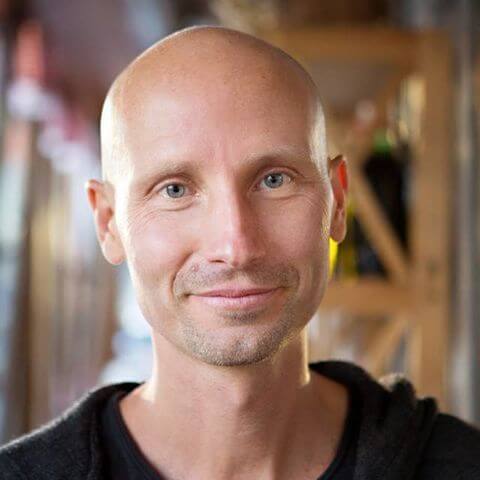
Valery Veryaskin
Valery Veryaskin has been practicing in the Buddhist tradition since 1994, when he sat his first 10-day Vipassana retreat in the S.N. Goenka tradition. In the thirty years since, he has trained in Theravada and Zen monasteries across Thailand and Europe, and studied with teachers including Thich Nhat Hanh and Norman Fischer.
He is the founder of Buddha in the City — one of the most respected secular dharma communities in the Russian-speaking world, built on the conviction that urban life is not an obstacle to contemplative practice but its most honest arena. His work with The Blue brings that conviction into contact with the specific conditions and pressures of people operating at the highest levels of professional life.
What you leave with
A daily sitting practice — calibrated to your schedule, your travel patterns, and your specific relationship to silence.
The Vipassana method — a precision tool for investigating experience directly, applicable to decisions, relationships, and difficulty.
A values audit — a clear picture of what you are actually measuring your life by, and whether it is what you would choose.
Urban practice methods — techniques for maintaining clarity and equanimity in full professional engagement, not outside of it.
Who this is for
Investors, founders, and operators who operate in conditions of genuine complexity and who sense that the quality of their attention — their capacity to remain clear, non-reactive, and present under pressure — is a limiting factor. People who are drawn to a tradition that has been working on these questions for 2,500 years, and who want to encounter it with intellectual rigour rather than spiritual sentiment.
No meditation background required. People with existing practice will find a deepening; people with no background will find an entry point designed specifically for the conditions of their life.